




Professor Ken Butcher
Professor Ken Butcher is the Medical Director of the New South Wales Telestroke Service, Head of Stroke at Prince of Wales Hospital and Deputy Head of Campus at the School of Clinical Medicine, Randwick, University of New South Wales, where he also serves as Director of Academic Conferrals.
Professor Butcher is a clinician scientist who has dedicated his career to improving treatment and outcomes in stroke patients. He has conducted extensive research related to intracerebral haemorrhage management including two randomised controlled trials assessing the safety of acute blood pressure reduction. He is currently adapting AI solutions to the clinical workflow for acute stroke patient management.
Prior to relocating to Sydney, Professor Butcher was a tenured Professor at the University of Alberta where he held a Canada Research Chair in cerebrovascular disease. He has held continuous salary and grant-in-aid funding related to stroke research since 2006 and has more than 200 peer-reviewed publications.

Dr Trevor Chan
Dr Trevor Chan is a Senior Emergency Physician at St George Hospital in Sydney, having been the Director of Emergency for 10 years. He is currently the Clinical Director of the Emergency Care Institute, part of the Agency for Clinical Innovation.
Dr Chan is Co-Chair of the NSW Emergency Department Taskforce, a member of the Health System Advisory Council and on working groups across the Clinical Excellence Commission, The Single Digital Patient Record Implementation Authority, NSW Ambulance, NSW Health Pathology and the NSW Ministry of Health.
He is a member of the Australasian College for Emergency Medicine Council of Advocacy, Practice and Partnerships and Health System Reform Advisory Committee, and a Conjoint Lecturer with the University of New South Wales.

Associate Professor Erin Cvejic
Erin Cvejic is an Associate Professor of Biostatistics and Deputy Head of School at the University of Sydney School of Public Health, Faculty of Medicine and Health. He is Program Director – Biostatistics, overseeing the local administration of a consortium-delivered postgraduate biostatistics training program as part of the Biostatistics Collaboration of Australia (BCA). He holds Fellowship of the Higher Education Academy (FHEA) and is an Accredited Statistician (AStat).
As an applied biostatistician, Associate Professor Cvejic's research is multidisciplinary, spanning diverse topics including shared decision-making, health literacy and recovery from acute illnesses. He is passionate about engaging in collaborative research and providing meaningful insights from data which can drive real-world impact and change. Associate Professor Cvejic has contributed to more than 110 peer-reviewed research outputs appearing in respected international journals including The BMJ, Lancet Infectious Diseases, and MJA.
Associate Professor Cvejic holds a Bachelor of Social Science (Psychology), Bachelor of Arts (Honours) Psychology and Doctor of Philosophy (Experimental Psychology) from Western Sydney University, and a Master of Biostatistics from the University of Sydney. He is recognised as a Star Graduate by the Biostatistics Collaboration of Australia.

Associate Professor Chris Degeling
Associate Professor Chris Degeling is the incoming Director at the Australian Centre for Health Engagement, Evidence and Values at the University of Wollongong. He is a health social scientist and empirical bioethicist who is internationally recognised as an expert in the design and implementation of deliberative methodologies in public health and public policy research.
As an author on more than 150 papers in bioethics, health policy and health service research, in the last five years he has secured approximately $5 million in category one grants and has led or contributed significantly to more than a dozen NHMRC and ARC-funded projects with researchers from more than 20 Australian and 15 international universities.
One of Australia’s leading exponents on the social and ethical dimensions of infectious disease control, Associate Professor Degeling is a member of the One Health High-Level Expert Panel (OHHLEP) for the United Nations Quadripartite (WHO, FAO, UNEP, WOAH). He also serves on the Research Advisory Group for the Australian Public Policy Institute.

Professor Stephen Duckett
Professor Stephen Duckett is an Honorary Enterprise Professor in the School of Population and Global Health in the Department of General Practice and Primary Care, at the Melbourne Institute at the University of Melbourne. He is an Emeritus Professor of Health Policy at La Trobe University.
He is a health economist, policy maker and manager who has occupied many leadership roles in health services and universities including as Secretary of the Commonwealth Department of Health and health program director at the Grattan Institute, an Australian public policy think tank, from 2012 to 2022. He is currently chair of the Board of Eastern Melbourne Primary Health Network and of the South Australian Health Performance Council.
Professor Duckett has held top health sector leadership positions in Australia and Canada and literally wrote the book on the Australian healthcare system (Oxford University Press, 6e, 2022).

Professor Adam Dunn
Adam Dunn is Professor of Biomedical Informatics in the Sydney School of Public Health, Faculty of Medicine and Health at the University of Sydney. He is a leading researcher in health informatics and the use of AI in health. His work focuses on clinical applications of AI using routinely collected health data, public health applications of AI related to the health information people engage with, and clinical research applications that use data from and about clinical trials to support evidence synthesis.
Following a PhD (2007), he has nearly two decades of academic experience across computer science, data science, clinical epidemiology, public health and computational social science. In 2020, Professor Dunn established the Discipline of Biomedical Informatics and Digital Health in the Faculty of Medicine and Health at the University of Sydney, convened the Digital Health and Informatics Network, and helped establish the Master of Digital Health and Data Science at the University of Sydney. He has a strong record of research funding for projects in Australia with a broad range of international collaborators.
Professor Dunn is Editor-in-Chief of npj Digital Public Health, Deputy Editor of npj Digital Medicine and Fellow of the Australasian Institute of Digital Health. He is strongly committed to the responsible and transparent use of data and AI to improve healthcare, strengthen public trust and support better decision-making across the health system.

Ms Louise Gates
Ms Louise Gates is the Executive Director of the Health Insights Division at the Australian Institute of Health and Welfare (AIHW).
Ms Gates leads the Health Insights Division and provides broad oversight of the Primary & Community Care & Information Standards Group, Health Systems & Performance and Population Health Group.
Ms Gates has extensive experience across several federal and state organisations including the Australian Bureau of Statistics and the NSW Ministry of Health. She has a Bachelor of Science with First Class Honours, a Master of Statistics and Master of Global Health/Infectious Diseases.

Mr Chris Graham
Mr Chris Graham is the Chief Executive Officer of Picker, a leading international charity that exists to promote and improve person-centred care. A researcher by background, Mr Graham has particular expertise in measuring, understanding and using people's experiences of health and care.
He has worked with partners around the world to develop approaches to gathering feedback from patients, service users and staff. This has included extensive work on the development of the NHS Staff and Patient Survey Programmes, two of the largest programmes of their kind anywhere in the world.
As well as his work at Picker, Mr Graham is a National Institute of Health Research (NIHR) faculty member and a non-executive director at the Professional Records Standards Body (PRSB). He is also part of the NIHR Quality, Safety and Outcomes of Health and Social Care Policy Research Unit. Mr Graham studied Experimental Psychology at Pembroke College, University of Oxford.

Mr Richard Hamblin
Mr Richard Hamblin is Chief Health Insights Officer at Health New Zealand. He was previously Director of Health Quality Intelligence at the Health Quality and Safety Commission, New Zealand.
Prior to joining the New Zealand health system Mr Hamblin worked for about 20 years in and around the NHS in England, including roles at the Care Quality Commission and the King’s Fund.
Mr Hamblin has been a Harkness Fellow and is concluding a PhD from Victoria University of Wellington.
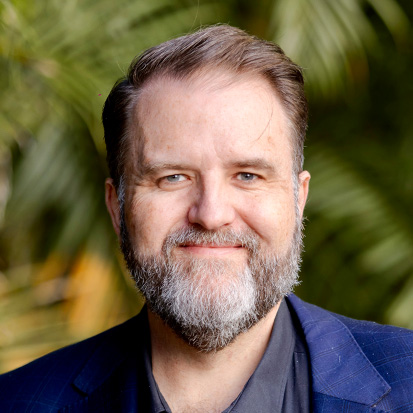
Associate Professor Ben Harris-Roxas
Ben Harris-Roxas is Associate Professor of Integrated Care in the School of Population Health at the University of New South Wales and Co-Editor-in-Chief of the Australian Journal of Primary Health. His research addresses how health systems can be designed to reduce fragmentation of care, with particular attention to people living in low-income areas, multilingual and multicultural communities, people with disabilities and carers.
The focus of his work is integrated care and primary health care equity. He has worked with Primary Health Networks, local health districts and community health organisations across New South Wales and Australia to improve how services work together for the people who rely on them most. His other focus concerns multicultural health and language equity. His research on the use of machine translation in NSW hospitals, drawing on a survey of more than 1,500 staff, led directly to an update of the NSW Health Policy Directive on Interpreters and informed the development of the CALD Assist app.
Associate Professor Harris-Roxas has published more than 115 journal articles. He is a Board Director of the Council of Academic Public Health Institutions Australasia, Chair of the Policy and Advocacy Subcommittee of the Australasian Association for Academic Primary Care, and a member of the Central and Eastern Sydney Primary Health Network Community Council.
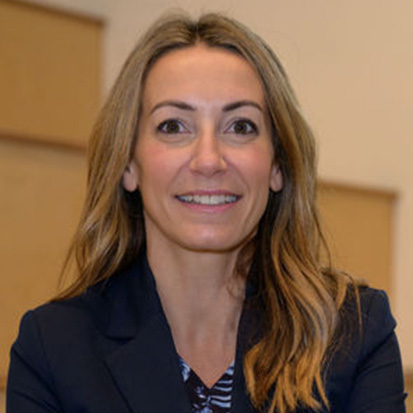
Professor Reema Harrison
Professor Reema Harrison (BSc (Hons) Psychology; MSc Health Psychology; PhD in Psychology of Patient Safety) commenced as Research Director and Chief Scientist at the Ingham Institute for Applied Medical Research in May 2026. She is a translational health services researcher and leads the Healthcare Engagement and Equity Research team at the Australian Institute of Health Innovation. Professor Harrison is also an Adjunct Professor at the University of New South Wales School of Population Health and holds formal affiliations with the University of Leeds.
Her program of research, conducted in partnership with health services internationally, investigates how increasing stakeholder engagement can contribute to improved healthcare quality, experiences and outcomes. Her work has sought to generate, investigate and evaluate models of care through a lens of diversity, specifically in relation to culturally and linguistically diverse communities and people with intellectual disabilities.
Professor Harrison established the CanEngage Network, which brings together consumers with lived experience of cancer from diverse backgrounds to design and collaborate in research.
She has devised and validated tools to evaluate patient and clinician experiences of care in a range of contexts. Her Listen to Me Project has co-produced first-of-its-kind accessible patient-reported experience measures (ePREMs) for and with people with intellectual disabilities to use in hospital care.
Professor Harrison's work has been recognised through more than 15 international, national and local awards. She has also published extensively on the use and quality of change management methodologies, peer support, mentorship and co-design approaches for creating change to enhance healthcare experiences and outcomes.

Professor Louisa Jorm
Professor Louisa Jorm is an internationally recognised leader in health data science and the application of linked health data, electronic medical records and AI to improve cardiovascular disease prevention, risk prediction and health system performance.
She is Foundation Director of the Centre for Big Data Research in Health at the University of New South Wales (UNSW), Deputy Director (Medicine and Health) of the UNSW AI Institute, and a Fellow of the Australian Academy of Health and Medical Sciences. Before joining academia in 2007, she spent more than 15 years in senior leadership positions within NSW Health, giving her extensive experience translating research into health policy and system reform.
Professor Jorm has established one of Australia's leading research programs in cardiovascular and other chronic disease using routinely collected health data. Her work combines epidemiology, causal inference and advanced analytics to develop risk prediction models, evaluate health system performance, and generate real-world evidence to improve prevention and clinical care.
Her research spans the full translational pathway, from development of national data infrastructure and analytical methods through to implementation in clinical practice and government policy. She has published more than 220 peer-reviewed papers.

Dr Suzanne Poynton
Dr Suzanne Poynton is Director of Research and Evaluation at the NSW Bureau of Crime Statistics and Research, an Adjunct Associate Professor in the University of New South Wales (UNSW) Faculty of Law and Justice and holds a PhD in Social Science and Policy (Criminology) from UNSW.
She has more than 20 years of experience in crime and criminal justice research and has authored more than 60 publications on a wide range of topics including policing, sentencing, prisons, substance abuse, domestic violence, disability and youth justice.
Dr Poynton specialises in quantitative methods for evaluating policy and program delivery. She has led several large-scale research projects using linked administrative datasets, including as Chief Investigator on the National Disability Data Asset NSW Justice Test Case.
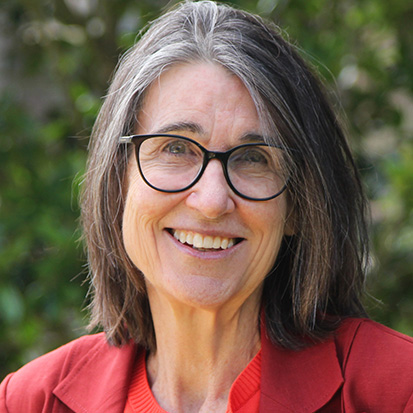
Dr Kim Sutherland
Dr Kim Sutherland leads the Office for Health and Medical Research (OHMR) at NSW Health. Prior to her appointment to OHMR, she held Director roles at the Agency for Clinical Innovation and the Bureau of Health Information.
Dr Sutherland is a health services researcher with experience in evidence synthesis and sensemaking, performance measurement and reporting, and change management in healthcare organisations. She played a central role in the development of frameworks for the assessment of unwarranted clinical variation and healthcare performance measurement in NSW and in the UK, and co-authored a series of reports on the English NHS quality agenda.
Dr Sutherland holds a Master of Science from London Hospital Medical College, a Master of Business Administration from Imperial College London and a PhD from the University of Cambridge. In 2022, Dr Sutherland received the Public Service Medal for outstanding public service to NSW Health.

Associate Professor Scott Winch
Associate Professor Scott Winch is a proud Wiradjuri man. He is a Principal Research Fellow, Indigenous Digital Inclusion for RMIT University and has nearly 30 years’ experience in Indigenous affairs at local, state, national and international levels.
His experience spans from urban to remote communities, primarily in the health, education and Indigenous data systems including leadership roles in service and program delivery, community development, research and evaluation and policy.
Associate Professor Winch has a PhD in Aboriginal Education, a Master of Applied Epidemiology and a Graduate Diploma in Health Services Management.